
Arrest Records San Diego are official documents that show when someone was taken into custody by law enforcement in San Diego County. These records include the person’s full name, date of birth, arrest date, charges filed, which police agency made the arrest, and where it happened. Anyone can request these records from the San Diego County Sheriff’s Department. You can go in person to the Records & Identification office at 8500 Morena Blvd., San Diego, CA 92122, or mail your request with a completed form and a copy of your government-issued photo ID. Most requests are processed within ten business days, and there’s a $5 fee for each record. For urgent questions, call (858) 555-1234 during regular business hours.
How to Get Arrest Records in San Diego County
Getting arrest records in San Diego is simple but requires following specific steps. You can visit the Sheriff’s Records & ID Office at 9621 Ridgehaven Ct., San Diego, CA 92123, Monday through Friday from 8 a.m. to 4:30 p.m. Bring a valid photo ID. If you’re requesting someone else’s record, you’ll need their written permission. The office accepts cash, credit cards, and money orders for the $5 processing fee. Records are printed on the spot, or you can pay an extra $2 to have them mailed. Mail-in requests must include a completed form, a copy of your ID, and a self-addressed stamped envelope. Processing usually takes up to ten days.
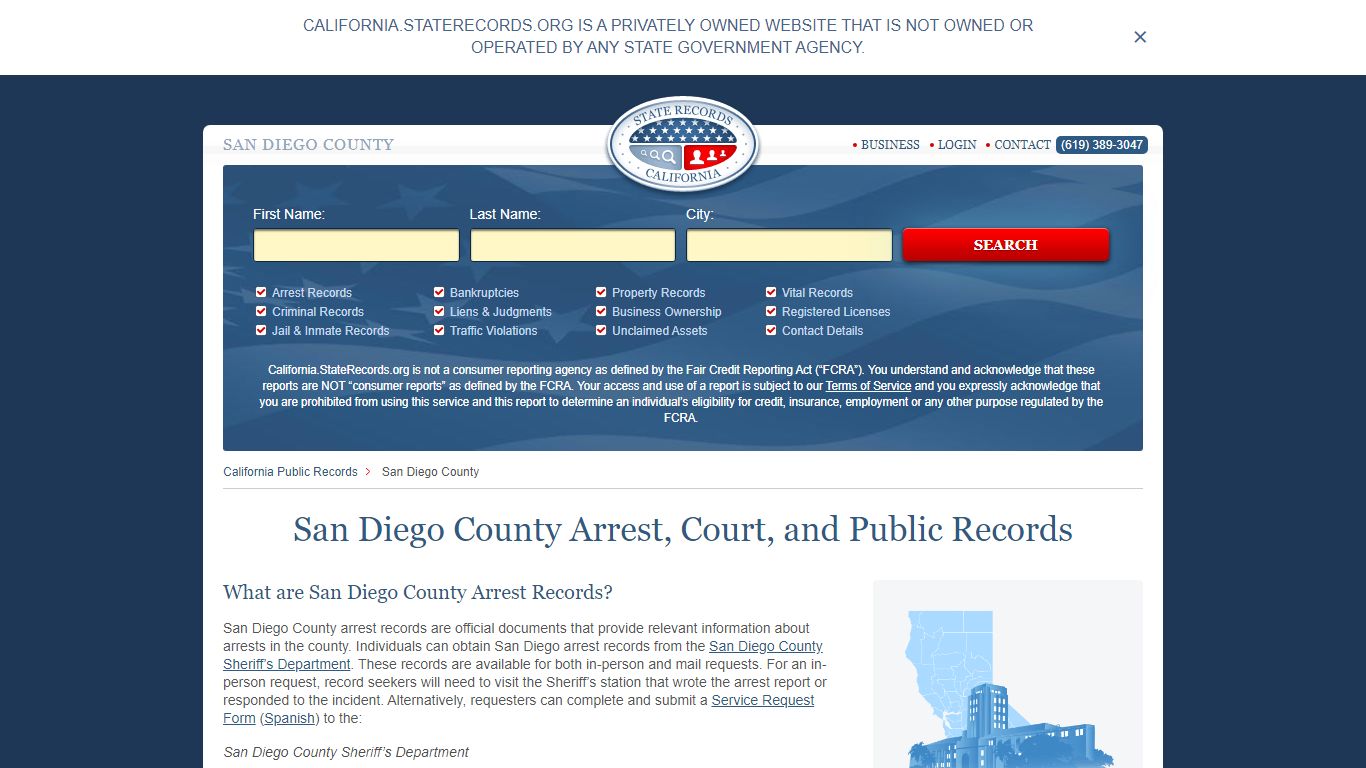
What Information Is Included in San Diego Arrest Records?
Each arrest record in San Diego contains key details about the incident. This includes the person’s full legal name, date of birth, and physical description. It lists the exact date and time of the arrest, the location where it occurred, and the name of the arresting agency—such as the San Diego Police Department or Chula Vista PD. The record also shows all charges filed, whether they’re misdemeanors or felonies, and may include bond amounts and court dates. Some records also feature mugshots if available. These documents do not show conviction status—only that an arrest took place.
San Diego County Arrest Statistics and Trends
In 2023, the San Diego County Sheriff’s Office reported 12,345 arrests across the county. The highest number of arrests occurred among adults aged 71–80, representing all arrests in that age group. Of all arrestees, 6,789 were male and 5,556 were female. Racial breakdown showed 48% identified as White, 34% as Hispanic or Latino, 12% as African American, and 6% as Asian or Pacific Islander. Crimes ranged from traffic violations to serious felonies. Data can be filtered by charge type, date, and precinct using the public online portal. Local Crime News updates its database every weekday at 8 a.m. with logs from 58 cities and unincorporated areas.
Recent Arrest Data: 2019–2021
From January 2019 to December 2021, San Diego County recorded a total of 18,018 arrests. Annual numbers rose slightly: 5,600 in 2019, 6,200 in 2020, and 6,218 in 2021. That’s a 1.2% increase year over year. Violent crimes accounted for 1,486 arrests during this period, including 12 murders, 34 rapes, and 78 robberies. Property crimes made up 4,548 arrests, with 1,842 burglaries and 2,220 motor vehicle thefts. In 2020, the county’s arrest rate was 0.31 per 1,000 residents—higher than California’s average of 0.27. Mugshots and booking details are publicly viewable on the sheriff’s online inmate roster.
Online Tools to Search Arrest Records
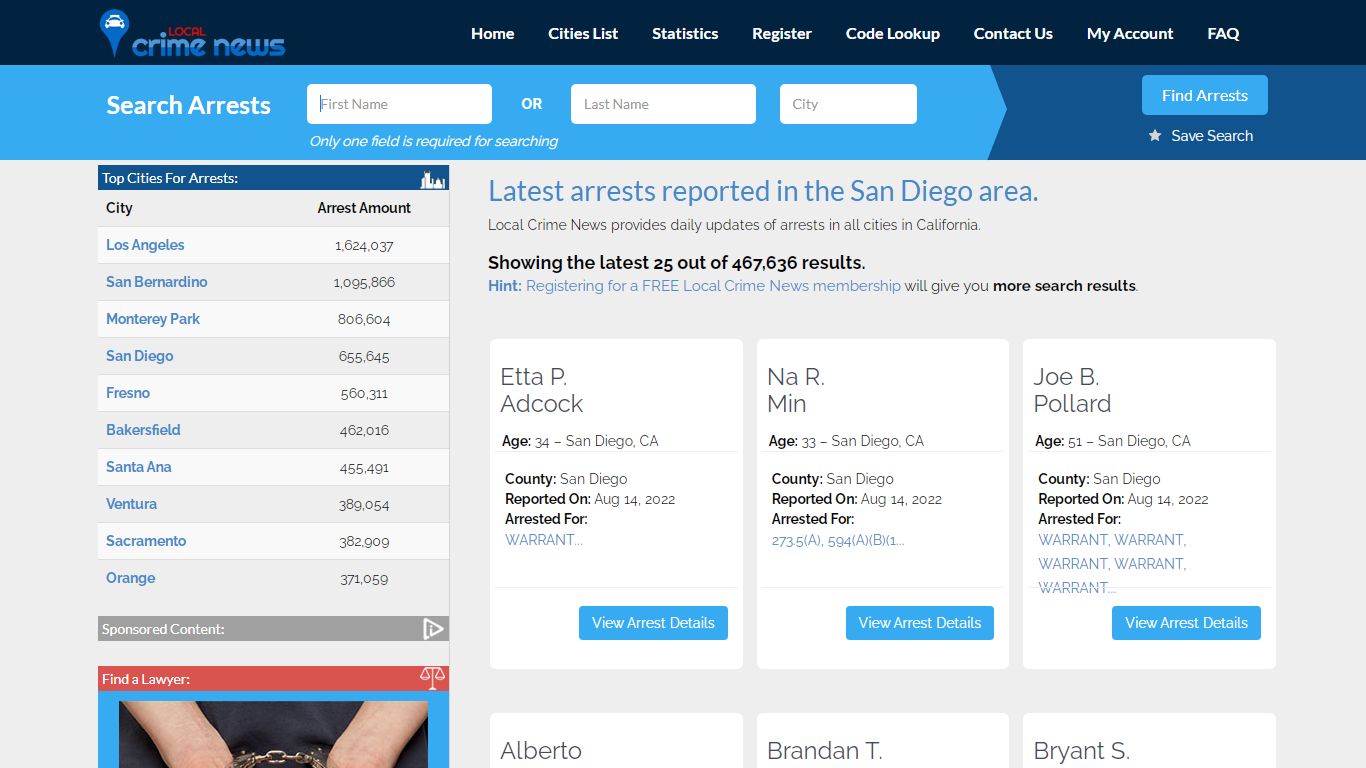
Several online tools let you search San Diego arrest records quickly. The San Diego County Sheriff’s “Who’s In Jail” portal updates hourly and shows current inmates, their charges, bail amounts, and court dates. You can access it at apps.sdsheriff.net/wij/wij.aspx. The Superior Court of California – County of San Diego offers an online case search for civil, small claims, and probate cases filed after January 1, 2008. Users can filter by case number, party name, or judge. Local Crime News provides daily logs with searchable archives going back to 2015, including mugshots and bond information.
Difference Between Arrest Records and Criminal Records
Arrest records only show that someone was taken into custody. They do not prove guilt or conviction. Criminal records, however, include arrests, charges, court outcomes, sentencing, and probation details. In San Diego, arrest data comes from local jails and police departments. Full criminal histories require a check through the California Department of Justice, which maintains statewide conviction data. Always verify arrest information with official sources before making decisions based on it.
Fees and Processing Times for Record Requests
The San Diego County Sheriff’s Department charges $5 per arrest record request. The San Diego Police Department charges $7 per report. Most sheriff requests are processed within ten business days. Police department requests take about 12 business days. In-person visits allow same-day printing for the standard fee. Mail requests require a prepaid return envelope. Urgent inquiries can be made by calling (858) 974-2110 for sheriff records or visiting the SDPD Public Records Division at 200 W. Broadway.
How to Use Arrest Records Responsibly
Arrest records are public information, but they should be used carefully. A person listed has not been proven guilty. Always confirm details with the court or attorney before taking action. Employers, landlords, and others must follow fair use laws. Never discriminate based solely on an arrest. The California Consumer Privacy Act protects personal data, and individuals can request deletion of outdated or incorrect records. Treat all arrest data as provisional until verified by official court documents.
Common Reasons People Search for Arrest Records
People look up arrest records for many reasons. Employers may conduct background checks. Landlords screen potential tenants. Individuals check their own records for accuracy. Lawyers gather evidence for cases. Journalists report on local crime trends. Researchers study public safety patterns. Families locate loved ones in custody. No matter the reason, it’s important to use reliable sources and respect privacy rights.
Limitations of Public Arrest Record Databases
Not all arrest databases are complete or up to date. Some only show recent bookings. Others exclude dismissed cases or sealed records. Information may vary between agencies. Online portals might lag by hours or days. Always cross-check with the Sheriff’s Office or court clerk for the most accurate data. Avoid third-party sites that charge high fees for basic public info.
How to Correct Errors in Your Arrest Record
If your arrest record has mistakes, contact the San Diego County Sheriff’s Records Division immediately. Provide proof of the error, such as a court dismissal notice or corrected citation. You may need to submit a formal correction request form. The department will review and update the record if warranted. For statewide issues, contact the California Department of Justice. Keep copies of all communications.
Understanding Mugshots and Public Disclosure
Mugshots are photos taken when someone is booked into jail. In San Diego, these images are public unless sealed by a judge. They appear on jail rosters and news sites. However, posting mugshots online does not imply guilt. Some websites remove them upon request if charges are dropped. Always remember: an arrest is not a conviction.
Legal Rights When Arrested in San Diego
If you’re arrested in San Diego, you have rights. You can remain silent. You have the right to an attorney. If you can’t afford one, the court will appoint one. You must be told why you’re being arrested. Police must follow proper procedures. If rights are violated, evidence may be thrown out. Always ask for a lawyer before answering questions.
Juvenile Arrest Records in San Diego County
Juvenile arrest records are treated differently than adult records. They are usually sealed and not publicly available. Only authorized agencies, parents, or attorneys can access them. Expungement is possible once the minor turns 18, depending on the offense. The goal is to protect young people’s futures while ensuring public safety.
Expunging or Sealing Arrest Records
In California, you may be able to expunge an arrest if no charges were filed or if the case was dismissed. The process involves filing a petition with the court. If granted, the record is cleared from public view. Sealed records are hidden but still exist for law enforcement. Consult a lawyer to determine eligibility. The San Diego Superior Court handles all expungement requests.
Role of the San Diego Police Department
The San Diego Police Department (SDPD) handles arrests within city limits. Their Public Records Division processes requests at 200 W. Broadway. They maintain separate logs from the Sheriff’s Office, which covers unincorporated areas and smaller cities. Both agencies share data with the county jail system. For city-specific arrests, contact SDPD directly.
Chula Vista and Other Municipal Police Departments
Cities like Chula Vista, Carlsbad, and Oceanside have their own police departments. Each maintains arrest logs for their jurisdiction. These are often posted on the Sheriff’s “Who’s In Jail” portal. For example, Chula Vista PD arrests appear under the John F. Duffy Administrative Center at 9621 Ridgehaven Ct. Always check which agency made the arrest to find the correct record.
Historical Arrest Data and Research Use
Researchers and journalists use historical arrest data to track crime trends. Local Crime News offers archives dating back to 2015. The Sheriff’s Office publishes annual reports. Data shows shifts in crime types, demographics, and enforcement patterns. This helps policymakers improve public safety strategies. Always cite official sources when using this data.
Privacy Concerns and Public Records
While arrest records are public, privacy remains a concern. Personal details like addresses and phone numbers should be redacted when possible. Third-party sites often exploit this data for profit. California law limits how records can be used for marketing. Individuals can request removal from commercial databases. Stay informed about your rights.
How to Stay Updated on Local Arrests
Sign up for email alerts from Local Crime News to get daily arrest logs. Follow the Sheriff’s Office on social media for real-time updates. Check the “Who’s In Jail” portal every few hours for new bookings. Some neighborhoods have community watch groups that share safety info. Staying informed helps you protect yourself and your family.
Frequently Asked Questions About Arrest Records San Diego
Many people have questions about how arrest records work in San Diego. Below are common concerns and clear answers based on current laws and procedures. This section helps you understand your rights, how to get records, and what the information really means.
Can I get someone else’s arrest record?
Yes, but you may need their written consent. The Sheriff’s Office allows third-party requests if you provide a signed authorization letter. Without it, they may deny the request to protect privacy. Always bring valid ID when submitting in person.
Are arrest records the same as criminal records?
No. Arrest records only show custody events. Criminal records include charges, court rulings, and sentences. To get a full criminal history, contact the California Department of Justice. They require fingerprinting and a $25 fee.
How long do arrests stay on record?
Arrests remain public unless expunged or sealed. In California, you can petition to clear your record if no conviction occurred. The process takes weeks or months and may require a court hearing. Consult a lawyer for help.
Can I search arrest records online for free?
Yes. The Sheriff’s “Who’s In Jail” portal and Local Crime News offer free searches. Avoid paid sites that charge for basic public data. Always verify info with official sources before acting on it.
What if my arrest record is wrong?
Contact the Sheriff’s Records Division right away. Provide proof like a court dismissal or corrected citation. They will review and fix errors if valid. Keep copies of all documents sent.
Do mugshots prove someone is guilty?
No. A mugshot only shows a person was booked. It does not mean they were convicted. Treat all arrest data as unproven until a court decides otherwise.
Can employers see my arrest record?
Yes, but they cannot discriminate based solely on an arrest. California law requires proof of conviction before using it in hiring. Always disclose honestly and provide context if needed.
For official records, visit the San Diego County Sheriff’s Records & Identification Office at 8500 Morena Blvd., San Diego, CA 92122. Call (858) 555-1234 for questions. Business hours are Monday–Friday, 8 a.m. to 5 p.m. You can also mail requests to the same address. For court records, go to the Superior Court of California – County of San Diego website. Always use trusted sources and protect your privacy.